How to Make Positive Choices in Your Relationships
Podcast: Download
Subscribe: Apple Podcasts | RSS
Each week, we jam about a topic and record it. This week, the conversation was so on point that we cleaned up the audio and turned it into the dialog below.
PHIL: Two or three weeks ago, I found myself a little disconnected from you and noticed that I was irritated when you made bids for attention, to use the Gottman idea, so I noticed this and thought “What’s this about, Phil? Is this the kind of relationship you want to have? What direction is this going in?” I don’t even know how I changed my behavior. I think I changed it by stopping doing that, whatever that was. So I’ve had a much nicer week. I can’t put dates on this stuff, but I’m just describing the feel of a little ripple.
MAUDE: I think what you’re saying matches what we’ve been talking about recently. When something happens that feels wrong, we turn inward and examine what’s going on inside us. It’s a way of owning our own feelings, rather than putting them outward onto someone or something else. Like, it’s that person or it’s this thing that’s causing me to feel what I’m feeling.
PHIL: I’ve got an observation on it that didn’t come to me as I was describing it. With the recognition of how I was feeling, I also had a choice of what to do, whether to let that continue, or to stop, look for a different angle, whatever, change it in some way. If I’m not comfortable, I make a change to make me more comfortable, whatever that is, and it’s the choice; it’s the intentionality part of that which I’m emphasizing here.
MAUDE: Yes. I think that you only gain the ability to do that when you turn toward yourself and go inward. That’s when you gain the ability to do what you just described – make a choice. Maybe that’s different for each person. When something happens that is out of sync in any relationship, I always have to get a little bit more information about what’s going on in me. Now that may be different for everyone, I don’t know, but for me, it takes a little bit of bouncing the thing around to find how to make a choice of what I can do with this. I always know how I want to end up, which is in this place that makes me feel really good and really reflects a choice, not just a reaction.
PHIL: Your description is not very different from mine. It’s not like I went “Ooh” and immediately took action. All this was going on very much under the surface rather than being thought about, and it slowly came into my consciousness, and I started paying attention to it.
MAUDE: By the way, just to add some information here, I was completely aware of what you were feeling.
PHIL: Oh, really? Tell me how it was for you.
MAUDE: Well, I had to work with it, too, because it didn’t feel good, and it also made me sad. It took me a while to look at all the information and find a path. Both of us were working towards the same goal, so we actually did it together, even though each of us did it individually, and it just transformed into all kinds of good things.
PHIL: It is a very strange thing, that. What you’ve just described, was that more thinking or feeling?
MAUDE: Feeling.
PHIL: So isn’t it amazing that we both have these matching experiences of the event, and yet we didn’t talk about it, even to ourselves? This description of the last few weeks that we have just had for the first time matches so well.
MAUDE: Right, because it’s a reality, so that’s why it’s the same. We really do both want the same thing, and that is why we each had a much better week after this process. It was one of those mutuality things where each of us did a variety of things to make it better.
PHIL: But it’s a very mysterious process.
MAUDE: It wasn’t a thing we were doing. It is something that comes out of the way we both are, because we really have the same values. What we’re looking for and how to be together are really, truly the same. I give it the name peace because I think it’s really the best word to use for it, but it’s a lot of things. It’s a place filled with light, and it feels light; it’s not heavy.
I wasn’t really trying to do a lot of stuff with my analytical mind. That’s not what was happening. I was just tuning into my senses; what I was feeling, what you were feeling, how it all felt in terms of being. It had a different feel about it than thinking in the analytical sense. It’s interesting to try to talk about this thing and put it into words, actually, because it was so not in words.
PHIL: That’s good. Looking back at it, my experience barely had words. It is hard to describe what that experience of recognizing it and deciding to be different was actually like. It doesn’t feel like I took actions, so much as I just decided that this is not a nice way to live and stopped doing it.
MAUDE: You know how people will hear this? An immediate response of many will be that they don’t want to suppress their emotions in order to have peace. And we’re not saying anything like that.
PHIL: We’re not saying don’t have emotions. Of course you do. Just don’t let them run you. Make sure that they are how you actually feel, and not just old patterns from the past that you are repeating.
MAUDE: Yes, and in fact, why pick the negative ones of all the feelings and emotions you can have? That’s this choice thing. I mean, why stay there? Why grant that this is the reality I’m going to choose?
PHIL: This is very interesting. You are suggesting that we choose what we feel.
MAUDE: I think there are choices in any given situation. I can have a whole variety of reactions. Some of them are more base than others, you know, they pass through for, like a millisecond. There’s a lot of different ones, and I have a choice of the place that I choose to really be in and put my energy in. So much of this other stuff is illusory. You’re hanging onto it. I don’t want to hang on to that one. It’s like, Let It Go. It doesn’t live here anymore.
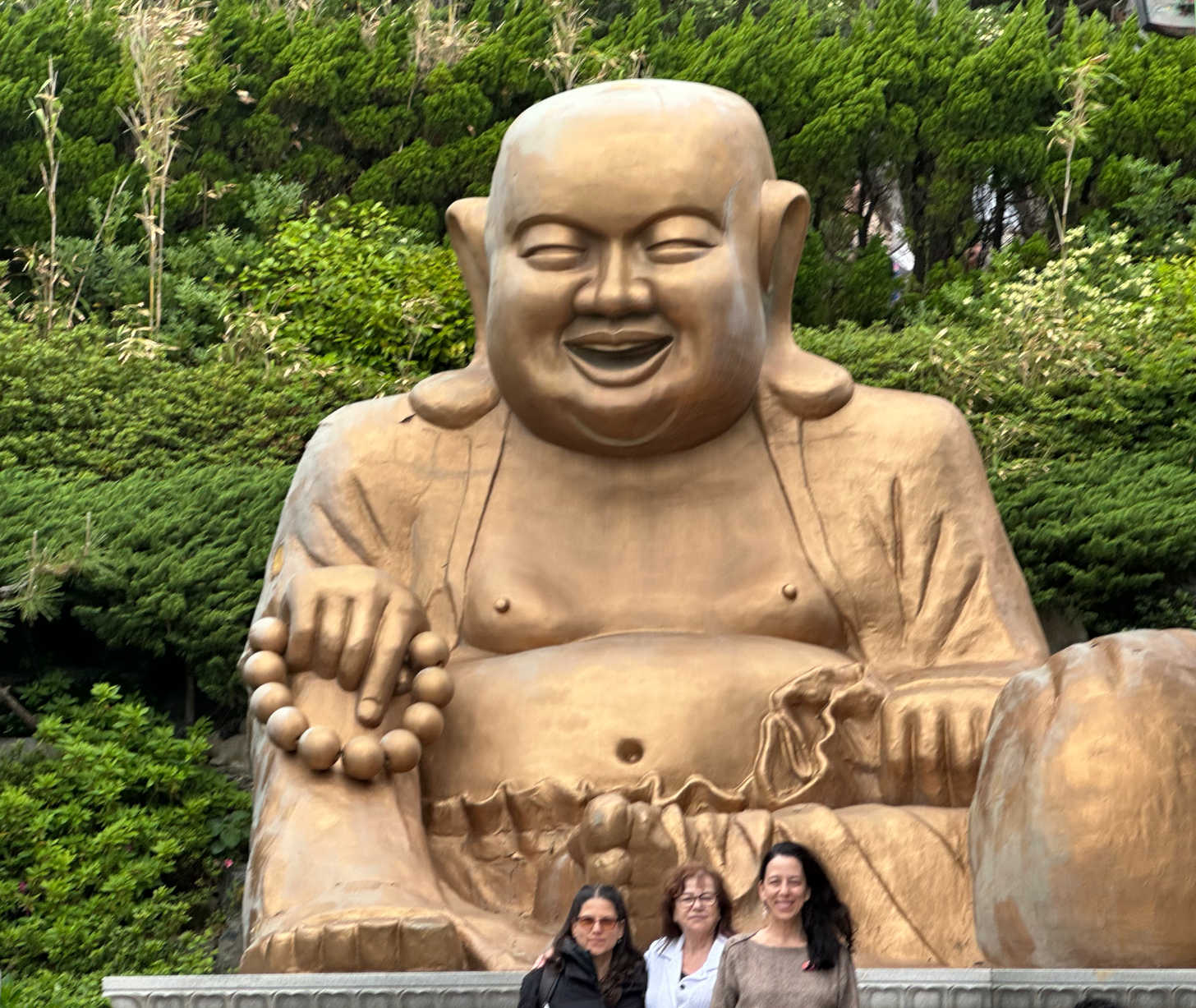
Photo credit: Maude Mayes
Photo note: Buddha in Busan
Read what else we have written on this topic.
Get our free weekly newsletter about how to have a harmonious relationship.