The Pleasures and Importance of Shared Experience in Your Relationships
Podcast: Download
Subscribe: Apple Podcasts | RSS
MAUDE: Phil is always saying that “we are a social species, and connection is a deep need we all have.” One of the ways that we achieve this in our various relationships is by sharing our experiences.
This generally happens in two ways. The first is that we do something together, and it creates shared moments. We embark on an activity with each other, and it exists between us and continues in our common memory of our connection. Taking time to be with each other and break out of the usual pattern of relating refreshes and enlivens any relationship.
We love being in nature, and the city we live in affords that on every street, with grand old trees everywhere, parks and ponds, woods and creeks, and a profusion of birds. Recently, we went over our local mountains to another town, staying overnight in a hotel. We walked around, talking and going out for lunch. We hiked to a nearby waterfall and soaked in the air and the smells. Phil and I always feel rested and peacefully, deliciously connected after a little trip like that. Going off to another location, with no big interaction with devices, and no scheduled events, brings a different kind of shared experience than our daily life offers.
The other kind of shared experience, and one that is just as important, is the revealing of our lives, our feelings and thoughts within our relationships. It encompasses the sharing of our struggles, sadness and grief, as well as our joys, growth, and spiritual paths. This often involves the telling of our stories, the challenges that we meet, and the paths we have taken. As some of us grow older, this also seems to include health reports and updates.
I have numerous deep relationships that are carried out over a distance, where this second type of shared experience takes place. Some occur over the phone on a regular basis, others through texts, shared stories and images, while still others are through Zoom, FaceTime, and WhatsApp. We have learned this skill through the years of Covid and they have become part of the fabric of our lives.
Whatever way we choose, the deep connection that is created through these ways of sharing is very important to keep relationships alive. It is an exchange that always involves being present in the moment in order for it to happen. It is an offering, an opening, and a confirmation of our shared humanity and our shared love for each other.
PHIL: What makes you feel connected to someone? It’s through what you have in common, and this is made up of two things – shared experiences and shared words. When you do something with someone else, you both feast at the same table. It might be big or small – you play golf together, go on a trip, attend the same class, or grow up in the same family – but it becomes part of the life that both of you have. Even though they interpret it from their own unique perspective, much of the experience is still in common. Your world and their world overlap.
Besides experiences, you also share thoughts and ideas with other people, whether directly or digitally. It might be what they think of a streaming series or which is the best mayonnaise (pun intended), or deeper things like politics, whether people are good at heart, or how to deal with loss. Every word is a glimpse into who they are and a chance for empathy.
These are all similarities, but we are primed to look for differences – that’s how we stayed alert for predators or food. Those survival skills remain with us, so we tend to notice how bad his golf swing is or what a disaster her money skills are, rather than what you have in common.
In my youth, I was struck by the idea that radically different languages like Chinese and English might lead to very different views of the world. I recently learned that this is called the Sapir-Whorf Hypothesis. I am currently thinking that the very existence of language changes our perception of the world, and one way is that words themselves are essentially divisive: something is this or not this.
The relevance is that we are both connected to and separate from someone or people in general, and might misperceive this. Because the West has such a focus on the individual, it is easy to notice the differences, but instead, look for the similarities, because they are what make us all connected.
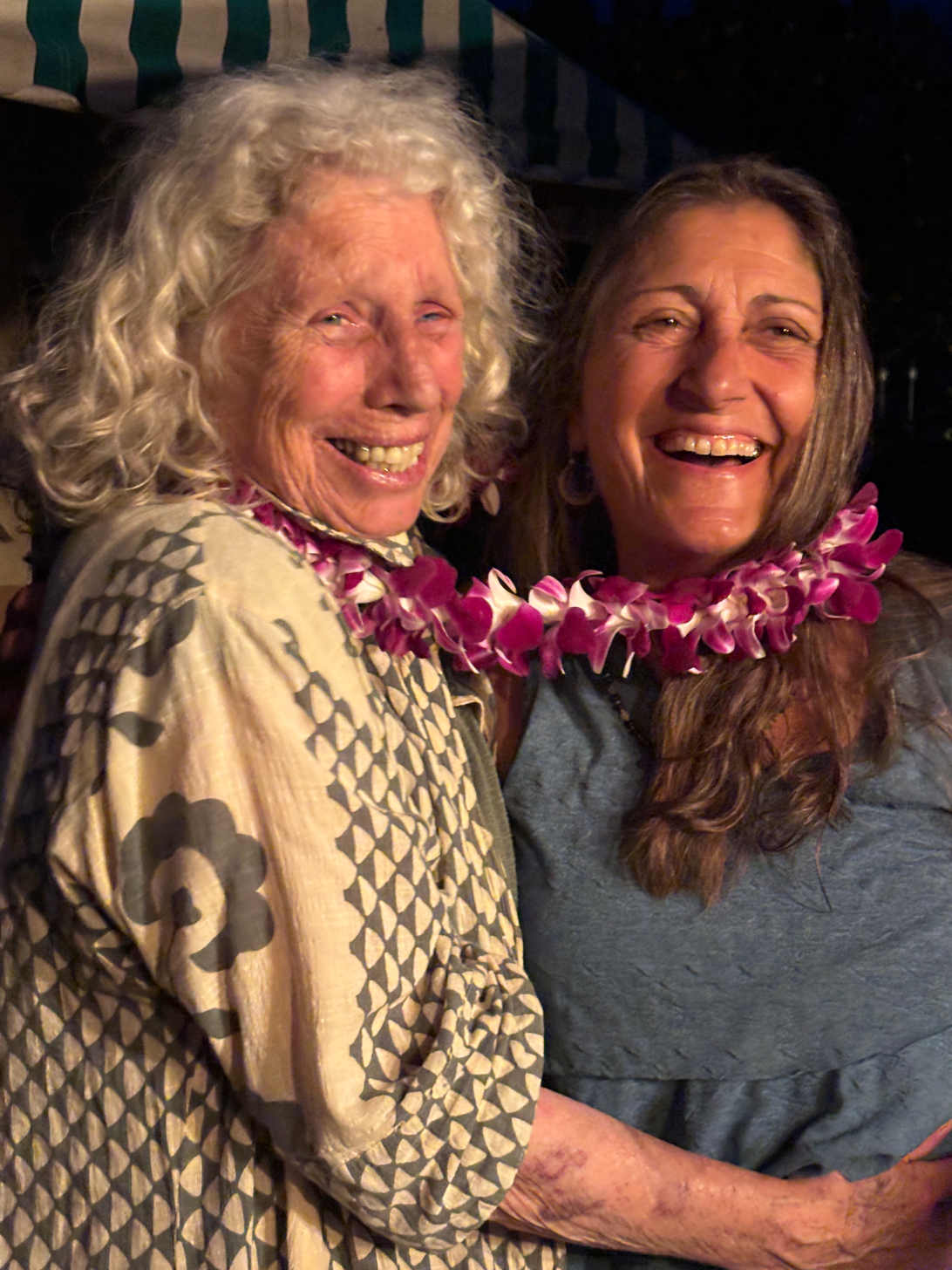
Photo credit: Phyllis Hopeck
Photo note: Two friends in Kauai
Read what else we have written on this topic.
Get our free weekly newsletter about how to have a harmonious relationship.