How Free Will and Choice Enhance Your Relationships
Podcast: Download
Subscribe: Apple Podcasts | RSS
MAUDE: Phil and I take a class in what used to be called ‘Conscious Awareness’ and is now called ‘Being Alive!’. In the last class, a discussion of mindful awareness brought up the value in stopping or pausing before reacting.
When you pause in your interactions, it offers a rich field of opportunity. This is not a place to go into intellectual analysis, but rather one in which you reach for the meaning and content you want to share, and the feelings you want to impart. There is also the opportunity not to respond, but rather to keep listening; to switch over from you-awareness to being centered on the other person and what they are sharing.
Once you pause, you bring something very important into play; you allow yourself to choose where you are coming from. And this is a choice. It can be one you have already made, like those of us who have chosen peace as the place we respond from. It can be the choice to respond from your heart, or to be open, or in trust. It can be to listen to your intuitive understanding of which choice will bring the best possible outcome for all. Whatever it is, it will be your choice, and not just a reaction born of survival behavior, defense, or anger.
When steering yourself toward peaceful relationships, you can fill your choice with what you want to imbue your interactions with. This is something similar to Metta Meditation, a Buddhist practice for cultivating compassion, granting yourself and those you relate to with loving-kindness.
When you realize you have a choice, it is very empowering. You are not the victim of what happens to you. You may not have control of what that is, but you do have a choice of what you do with it. The same is true for what reactions someone’s behavior kicks off in you. You cannot control what the other person says or does, but you do have a choice in responding, rather than reacting.
In the arena of choice, there is an interesting element. You don’t have to make certain choices over and over again. You can decide once, and then you never have to make that choice again. A friend once told me how she stopped smoking. She decided not to smoke. Then every time that came up, she merely remembered that she had already made that choice. She never had to make it again. She only had to do what she had already chosen.
Make a choice. When your reactions aren’t in line with your choice for how to be in your relationships, pause. Move into the place you have chosen and respond from that place. This takes practice and repetition. And then it doesn’t. At some point, you are living your choice.
PHIL: We react to what is happening all the time. That is the privilege of being alive. In general, we’re pretty reactive to our thoughts, feelings, and sensations, which doesn’t always produce the best result. If you can make a gap between the stimulus and the response, you create an opportunity to respond, rather than react. It gives you the opportunity to avoid things that cause unnecessary friction: snarkiness, annoyance, avoidance. You know what yours are. By pausing, you introduce the possibility of choice.
This isn’t easy; it takes practice. Sometimes you fail. Sometimes you forget to pay attention. It requires looking inside at those thoughts, feelings, and sensations and realizing that you are more than just those.
Until you can see what is moving you around in the world, you are at the mercy of your thoughts and feelings. By looking, you can see that you have feelings, and you can choose how to respond to them. Maybe they are feelings you hadn’t noticed, and you need to take them into account. Maybe they’re feelings that need to be handled differently. Our thoughts and feelings are sometimes at odds, and this is the way to align them, whether by allowing intuition a voice, or by curbing our antisocial feelings and finding their complementary positive ones.
Free will has been struggling to find a place to exist these days. The idea of a clockwork universe is now seen as simplistic, but from the Twinkie defense to neurological studies, our actions are increasingly being described as determined. It is what I think of as a push model: causes have effects.
But perhaps that is only half of the picture; perhaps there is a pull model, too. Life has goals, and our actions are in furtherance of those goals. This is an ancient idea going back to Plato that has fallen out of favor these days, but if free will exists anywhere, it is in the gap between stimulus and response. Lean into it. Take charge of your life.
Photo credit: Maude Mayes
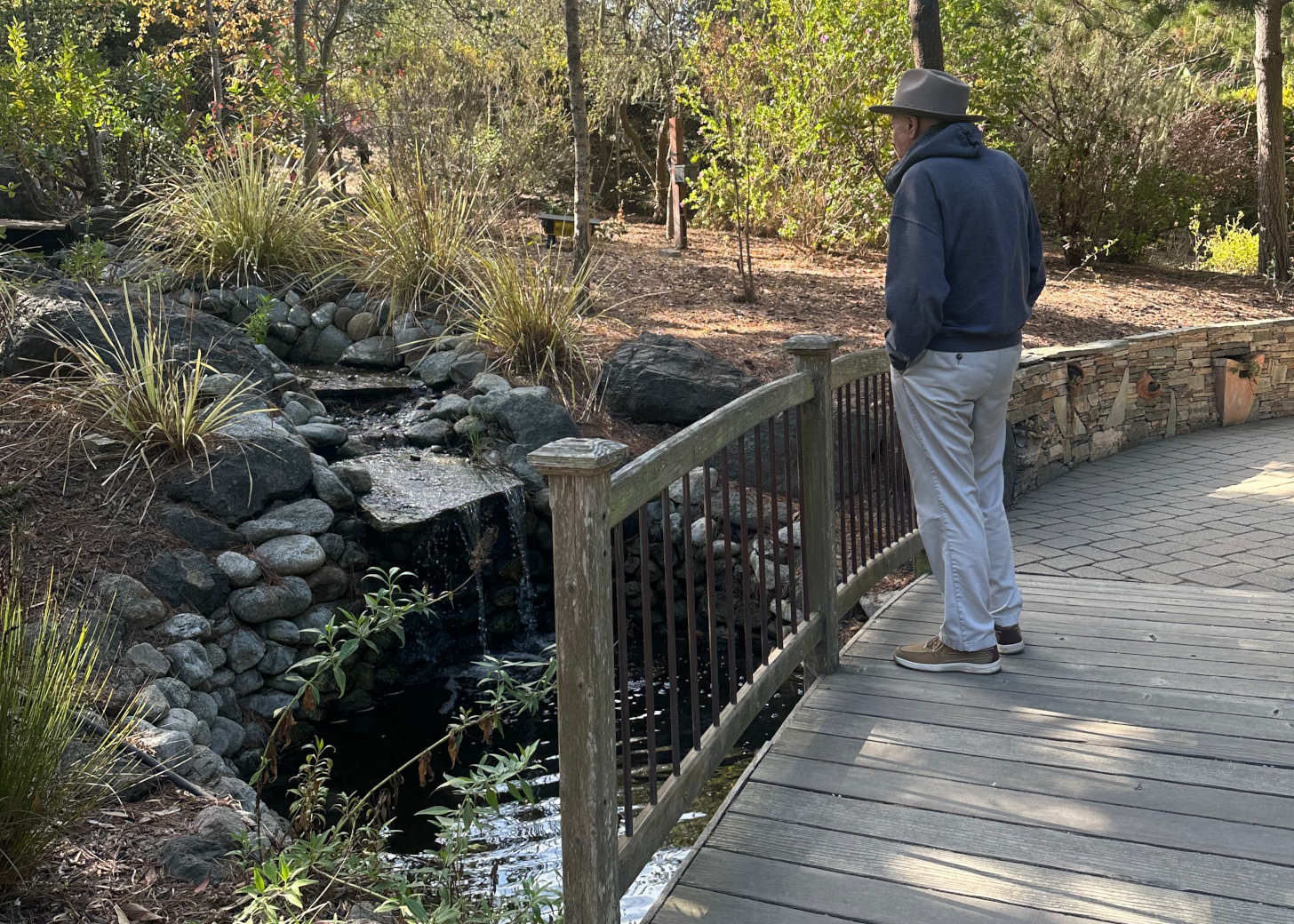
Photo note: Phil in a contemplative mood
Read what else we have written on this topic.
Get our free weekly newsletter about how to have a harmonious relationship.