The Secret to Deep, Peaceful Relationships is Quiet but Powerful Trust
Podcast: Download
Subscribe: Apple Podcasts | RSS
PHIL: Trust is an essential part of good relationships. The first thing I want to say about trusting someone is that it is not what they say, it is what they do. What they say about themselves or how they promise to be is not a basis for trust; instead, it is how they actually act in the world, and it takes time to learn how they behave under various circumstances. Trust is something that builds up slowly over time.
The other side is how you show yourself to be trustworthy, and that is by being open and honest. The two operate together. Honesty is paramount; if the other person cannot be sure what you say is actually the case, how can they ever fully trust you? So you demonstrate that by being open, by sharing your feelings and responses. That’s not something we do fully as a matter of course; we use social graces to fit in. But as we come to trust another person, we can drop our persona and reveal more, so we become more trustworthy to the other person.
To be honest, you have to know who you are. This needs introspection; how can you express your feelings if you don’t know what they are? I think this is difficult; my emotions are a constant flux of physical responses, and it is hard to catch them and find words for them. It is made more complicated by the way that we have been brought up over the years to modify and moderate our feelings; to be polite, or to lash out when criticized, or a thousand other ways we have adapted to live with other people. Coming to know myself is a process of distinguishing my responses from the entire social slot in which I fit. I can only speak personally here; your responses to feelings and social pressures may be quite different.
Over time, you get to see how the other person conducts themselves and learn about what motivates them. When those are positive, you can share more and more of yourself, and this increase works from both sides, so there is a feedback loop of increasing trust.
And at some point, you come to know the other person so well that you have total trust in them. This doesn’t mean they’re perfect; they might be poor at arithmetic or not good at folding paper or have difficulty expressing anger, but the point is that you know them; you know how they are, and you accept them, flaws and all. You come to recognize that their values are the same as yours, and when that is the case, there can be no cause for conflict.
Some added thoughts: people can be pretty brutal to each other (see history books for details), and many of our social pressures are designed to control the dark side, so isn’t dropping those strictures going to let it out of its cage? I think that brutality is how we have learned to respond to being treated poorly, and that fairness and caring are the natural ways we respond to each other. This is what you find when you go deep inside.
MAUDE: One of the foundational characteristics of a loving relationship, one that promotes peace, is trusting each other. Sadly, trust has become a struggle in today’s world, against the background of falsehood, lies, cheating, scams, fake news and peoples’ inhumanity toward one another.
A lot depends on what you choose to look at when evaluating how to be trusting. I see, and do not ignore, the climate of deception and lack of trustworthiness that is expressing itself today so blatantly. But I also see the love and deep commitment to goodness, truth, and beauty that exist for so many people around the world. My view is that most people are inherently good.
Trusting requires us to be vulnerable and to be willing to open ourselves to the possibility of betrayal. We must choose what to believe in and be active in placing our intention to trust. We do this despite any messages to the contrary from the world.
Without this kind of trust, it is impossible to create deep relationships or to be at ease in those relationships. We will not find peace as an experience in our lives without it.
I handle whether to trust others or not similarly to everything else, in that I turn inward to make those decisions. The more I trust myself, the more I trust others. It becomes clear whether I am correct and should listen to my instincts, my inner voice, and what I feel, as well as what my body tells me.
With this inner trust of myself, I have a better idea of when I should tread carefully, or go more slowly in establishing trust within a relationship. This also develops from getting to know the other person. It comes from seeing whether the person’s words and actions match; whether the person’s espoused values are being expressed in their actions.
Look for a place within yourself that is your own true voice. If you come from that sense of rightness and fairness, you will be all the more able to recognize it in others, and to be recognized for it. That will be your point of reference, your trust meter, if you will.
When this is present between people, it brings forth honesty and openness. It calls forth the kind of exchanges that make you feel safe and have faith in others. Between Phil and me, between me and the kindred spirits of my life, this form of trust is absolute. It is unshakable and is a great balancing factor in my life.
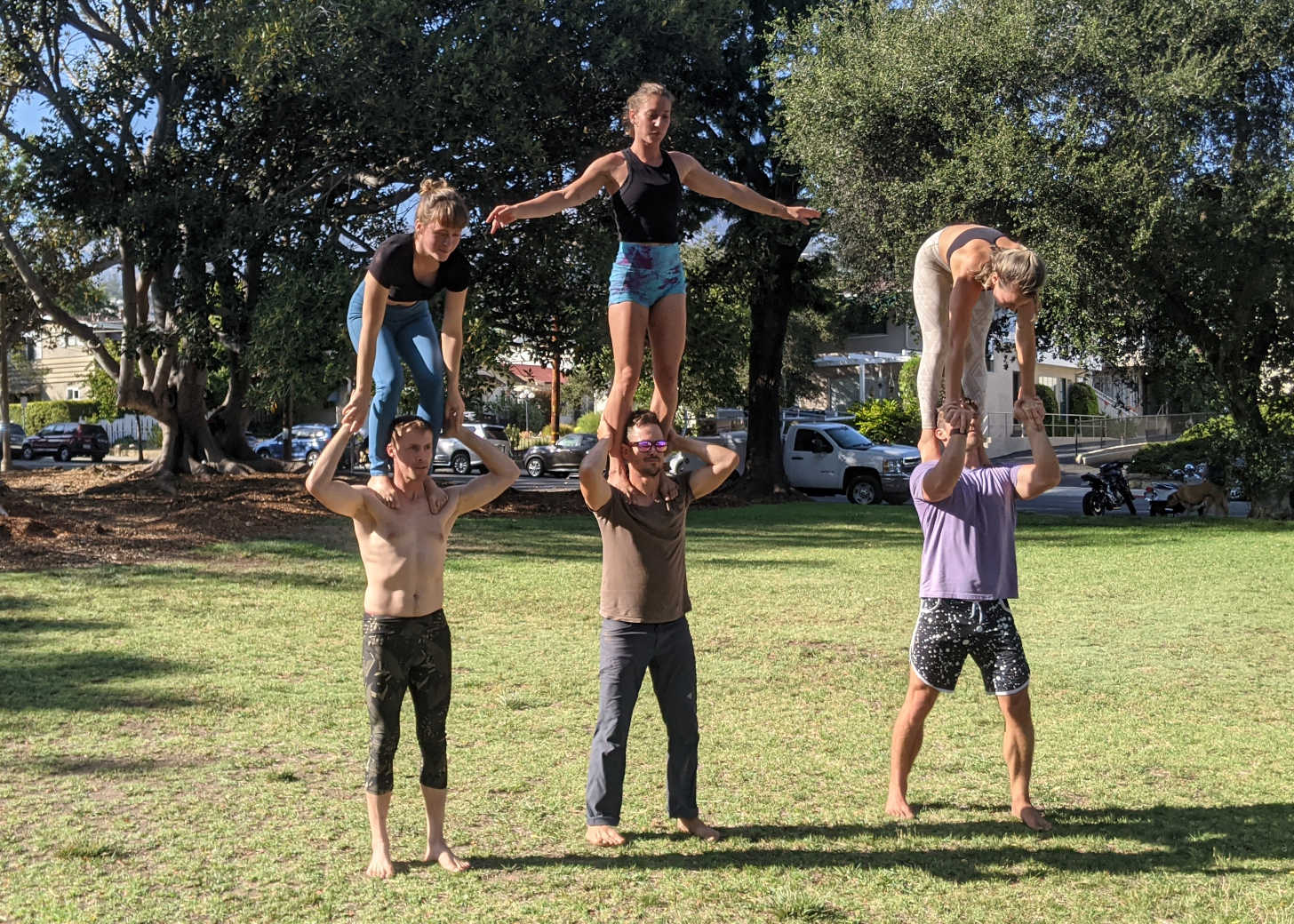
Photo credit: Phil Mayes
Photo note: To do this needs complete trust
Read what else we have written on this topic.
Get our free weekly newsletter about how to have a harmonious relationship.