How to Transform Your Relationship by Reaching Total Acceptance
Podcast: Download
Subscribe: Apple Podcasts | RSS
MAUDE: Total Acceptance. We’ve written a number of times about this way of being in relationships. The experience of being fully accepted is profound. Here is a quote from our first book describing what we mean by this term:
If you know that there is nothing on a dance floor, no thumbtacks or other dangerous items, you can be free to dance about, flying freely through the air, unmindful of where you come down. As soon as you introduce one thumbtack somewhere on the floor, you are no longer free to leap and prance freely. You must always be careful you don’t come down on the tack and injure yourself. This very knowledge inhibits you all the time, even if it’s just a little bit.
This is the same within relationships. The more thumbtacks that appear in the exchange, the more you must be careful, defended, withdrawn, on alert. Once you reach the threshold of 100%, there is peace and joy and no busyness in the mind about whether you are in or out, or whether the person is right or wrong, or needs changing or adjusting. You accept yourself and the other and go forward in the freedom that this way of being brings.
Some readers have reported it can feel like a totally unattainable goal. Yet, we know from direct experience that it isn’t. Let’s take a look at the process involved in getting there.
But first, let me quote from another post: “Whenever we write about total acceptance, we feel called upon to quickly define what it is not. So, to get that out of the way first: it’s not allowing abuse, it’s not about accepting the unacceptable and it is not relating through power and dominance.”
The road that leads to truly peaceful relationships starts with becoming open and honest about yourself to yourself. The more you know who you are and accept yourself with all your foibles and strengths, the more you will be able to bring that to your relationships. Openness and honesty with others create a feedback loop that encourages the same kind of behavior from those you share this way of being with. It is self-reinforcing, as well as calming and reassuring. The sense that a person is sharing openly with you and is unafraid to disclose who they are is a powerful message to enter that relationship without fear.
This engenders a feeling of trust. There is a sense of ever-growing relaxation, as well as a sense of growing closeness to these kinds of connections. When you can trust who you are with someone, and know that you do not have to be defended or on alert, it creates a deep and profound sense of peace. Over time, as you learn that the words are also carried over into actions, trust builds.
At some point, almost without realizing it, you make the move toward total acceptance. It’s not really a leap, although it may seem that way when you read about it. It is at the point where trust becomes complete, and you know for sure, deep inside, that both of you are on the same side. There is no longer any assessing, evaluating, or judging. You have totally accepted that both of you are unique individuals, and therefore intrinsically different. The only thing really the same is that you are on the same side. And that very knowledge allows you to be completely yourself and totally accept the other person for who they are.
PHIL: We wrote a book a decade ago that still describes exactly how we are; the bones haven’t changed at all, and at the same time, there are nuances and different angles that we have come to recognize over the last ten years. One of the key points of this book is total acceptance, and we have come to see that there is a series of steps toward getting there. Before total acceptance is trust, and before trust is honesty and openness, so there is a progression to get there.
A lot of people freak out at the idea of total acceptance and cannot imagine it. Rather than describing it here, I want to reach it by describing this progression.
The first step is openness and honesty, and what follows from that is that if you want a relationship with total acceptance, you have to start by being open and honest yourself. In the book, we interviewed a number of people, and what James said has always stuck with me:
James: Before I met Rita, I was dating, and it just got so frustrating because you meet somebody and put up a front to be more attractive, but then ultimately you have to be honest, so I just decided that I’d had enough. I wasn’t going to care about anything any more, and just live my life. So when I would meet somebody, I would just be completely honest and open right on the very ?rst date, and tell her everything about me. All the stuff I’d done right, all the stuff I’d done wrong – just no secrets! And then, if you still want to meet for another date or something that’s great, but I’m not going to put up a front.
This differs from the way we normally behave, trying to be as attractive as possible, and it takes a little bit of effort and risk to show a part of yourself that is not Instagram-perfect. But when you do so and feel seen, heard, and accepted, it encourages you to be bold again and reveal more, and as that is also accepted, your trust in the other person increases.
It needs to work both ways (unless you’re talking to your therapist); you have to accept how the other person is, too. We’ve written extensively elsewhere on how differences are bound to exist and can add variety, not challenges, to your life. They are their own person; it is not your place to say how they should be.
This process continues over time, and you get to know and see the other person better: how they behave in good and bad times. But more than their behavior, you come to have a sense of who they are, their spirit, if you will, and at some point, when you can feel their essential goodness, you can make the leap to total acceptance. This is twofold: you accept everything the other person says or does. Just think what a relief this is: you don’t have to manage their life; you can put that energy elsewhere.
And then, of course, when that same total acceptance is offered to you, you can be yourself and express yourself without reservation. It is an opportunity to dive deep in the presence of another, a form of sharing and connecting that can, at times, even transcend the self.
When two people practice total acceptance, there is a true partnership; you are both on the same side, and once that is the case, there is never any need for conflict with the other person. Differences, yes, but they can always be resolved. Living like this creates a peace that is not possible in any other way.
Our two books are Secrets of a Successful Relationship Revealed and How Two: Have a Successful Relationship.
Photo credit: Maude Mayes
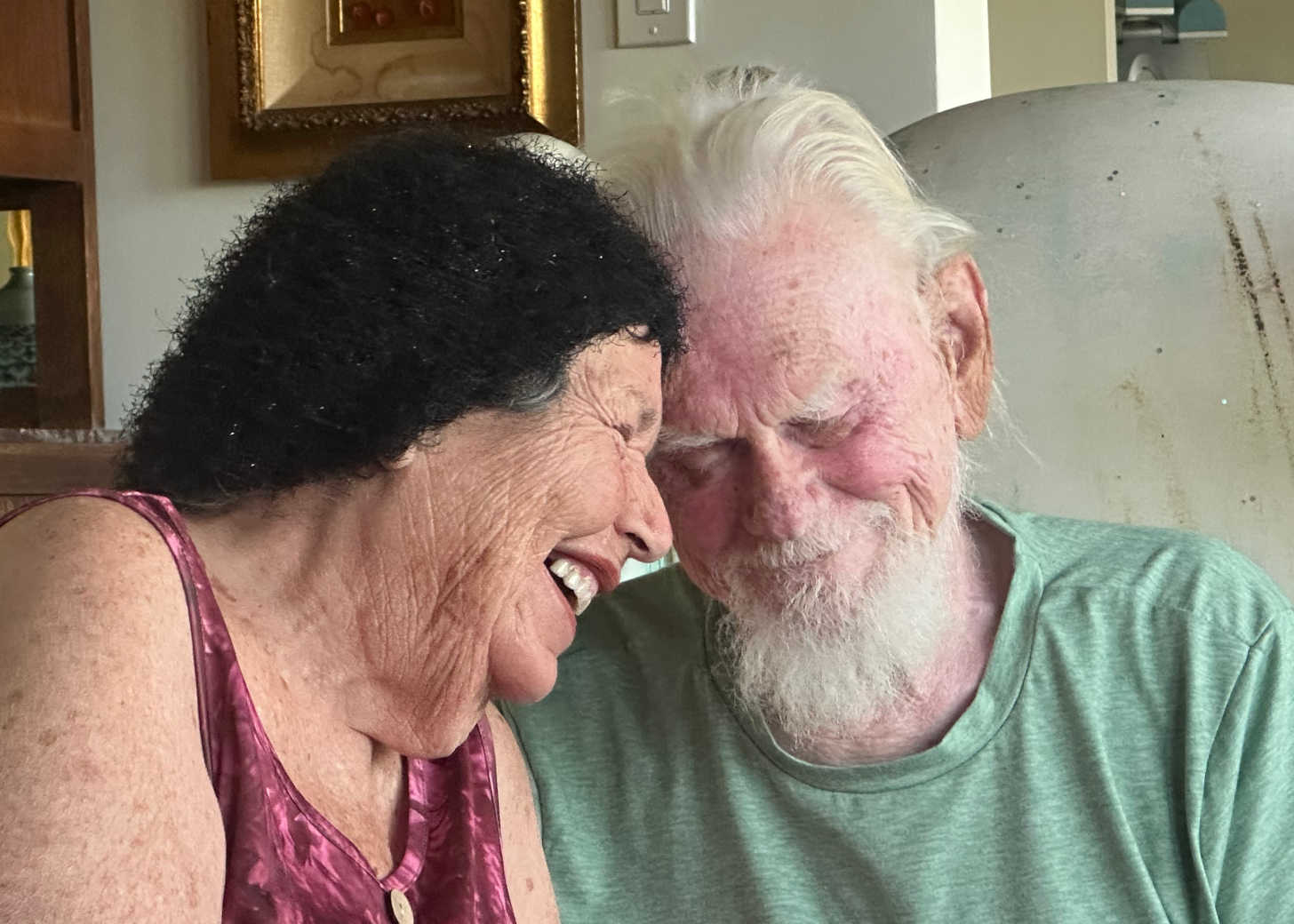
Photo note: Two friends who have reached total acceptance
Read what else we have written on this topic.
Get our free weekly newsletter about how to have a harmonious relationship.