Successful Relationships Reading Corner
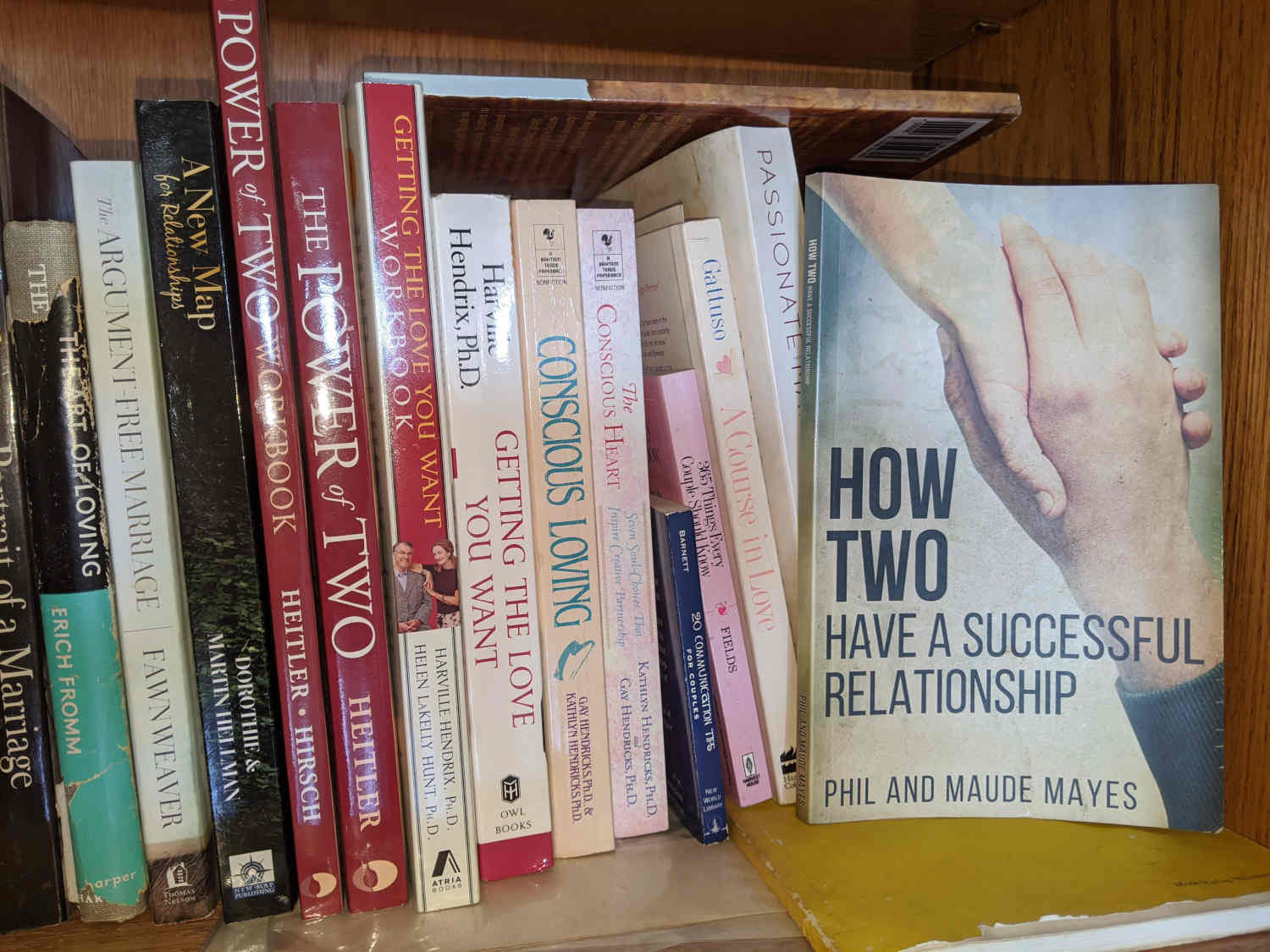
This week, we wrote about how to avoid contention in your relationships. Here are some posts looking at different aspects of this topic.
How to Avoid Arguments and Resolve Disagreements in Relationships “An argument carries with it the sense of opposition and separation. It usually generates an overall negative energy, with emotions and behaviors that push people apart: anger, raised voices, irritation, impatience, and snippy responses like eye rolling. The stance of two people arguing is filled with a sense of needing to be right; with the belief that there are different sides and yours should be the winner in the exchange. Sadly, when arguing, nobody truly wins and the problem is never fully resolved. Arguments are inherently divisive and have their own escalation built into them. Disagreements, on the other hand, don’t degenerate into arguments when two factors are present: each of you know you’re on the same side, and you share core values that underlie your life’s decisions. When these two factors are present, disagreements can be seen for what they are: differing viewpoints or different desired actions, perhaps different wants or needs. Nothing more and nothing less.”
How Mutual Solutions Help You to Solve Disagreements and Avoid Arguments “Are you having disagreements that turn into arguments in your relationships? Are your different ideas about how to do things causing separation and distance between you and your partner, friend, relative? This can be changed! Disagreements come in different degrees. They range from the practical to the emotional, and can feel like a sheer 100 ft. cliff in your way. You can’t possibly imagine what a resolution could be. But here’s the thing. There will always be one, barring the rare cases where you break up or that this is a recurring argument that never gets resolved. There is a solution out there somewhere, even though you can’t imagine it in the face of that daunting 100 ft. cliff, and your current position probably isn’t it, so quit trying to defend it and go exploring instead. Here’s where the fun comes in. You can find a path toward mutual solutions: a place where both of you are happy, satisfied and even enriched beyond your original version of the solution. To do this, two factors are necessary: belief and intention. You need to believe that there is a place where the two of you can come together on an issue without either one of you feeling you are giving something up or deferring just to have peace. This is nothing like what is often referred to as compromise; that involves one or both parties giving something up to find a place that works for both of you. Compromise is quite different from finding a mutual solution.”
A New Way to Look at Differences in Relationships “PHIL: This is what happens with differences. The other person does (or doesn’t) do something. You get irritated, resentful, impatient, whatever. There are two obvious paths to fixing this. The other person changes, or you let go of that annoyance. The first isn’t full acceptance; the second one is. But there are also situations where you cannot put it aside. You’ve been hurt, or a commitment wasn’t met, or something else rankled. Speak about it, making it completely about your state, your feelings, your reactions; in other words, not about the other person. They will learn where you are at, and you may gain clarity by verbalizing them, too. This initiates a dialogue where the other person may make a change, or explain what they did (or why they did what they did) in a way that you had not previously seen.
MAUDE: After all, we’re all unique, so everyone is truly different. We’ve written about accepting differences and even celebrating them. But there’s another quality of interacting peacefully with others. That quality is a deep interest in and fascination with getting to know the other person. In other words, it’s not just accepting, it’s not even just celebrating; it’s the joy in learning and growing in the understanding of the other that is the key.
PHIL: And that surprise and pleasure is never-ending. it’s not like you get to know them and you end up knowing all about them to a degree that they become predictable. The otherness (which does not preclude the many agreements and similarities) will always be there to fascinate.”