Acceptance in Your Relationships Involves Listening to More Than the Words
Podcast: Download
Subscribe: Apple Podcasts | RSS
MAUDE: Acceptance is such a foundational part of peaceful relationships that we are always looking for new ways to write about what it means to embrace it. We recently had a thought-provoking conversation with a dear friend who used a different way of referring to his beliefs on life and death than either of us uses. He touched on many personal experiences in his sharing with us, and we were able to relate strongly to what he offered. We both accepted him and the full root of what he shared, although it sounded like he was proposing something neither of us saw the same way that he did.
And there lies the crux of one of the true elements of acceptance: what it is, and what it is not.
Often people think that acceptance is agreeing with a person on their descriptions of things: you hear someone and find you have more or less the same way of framing your likes and dislikes. You can accept them due to their similarity and agreement with you. This is a definite level of acceptance, but not the foundational form we refer to.
Phil and I use different concepts, words, language, systems, and body language to describe our beliefs and theories, and even the truths we base our lives on. And yet, we understand each other on the deepest level. We also know we are talking about the same thing, even when the words and images are different.
We share the same meanings and values, even though we use different images and stories to describe these things. It doesn’t matter. We know that in essence, in the area of truth, we share the same rooted knowing of our meanings and values. These are all based upon one vital agreement: we are all part of the same family. The way we treat each other, friend or stranger, is that we are related.
This same kind of acceptance is found in all my deep relationships. We do not need to describe how we ‘see’ things in the same manner. We may each find different affinities for expression and belief systems. We accept each other, and often even revel at the differences in how we interpret the outworkings of life, at least on the surface. When we plumb the depths, we encounter resonance. We find shared truth in the essence of things.
We accept each other with love.
PHIL: You all know the injunction “Think positive”; the idea that your expectations about something can bring it about. Expecting an event to be fun rather than boring can change your enjoyment of it. Your beliefs are the underpinning of how you experience the world.
This is really quite a radical idea, as it suggests that by changing what you look at and what you believe, you actually change the world, or at least how it appears to you. Let me suggest that when you look at what you have in common, rather than your differences, it can be transformative.
A huge amount of our day-to-day life involves other people, and we feel connected to people by virtue of what we have in common. It’s why British people talk about the weather: it rains on everybody. We form groups and hang out with people with common interests: a gardening club, neighborhood watch, political involvement. So working with what you have in common is a way to feel more connected.
The big C of commonality is that we are all human. That’s a step too far for many people; it’s easy to see rationally that that is the case, but the differences, whether of politics, religion, or culture, and the fears that they bring out are all that can be seen.
Both words and feelings are aspects of what we believe, though for feelings, truth is a better description than belief. This, of course, is still subjective; two people can have very different feelings about something.
The feelings are what are important. The words are how we attempt to describe them, and different people can come up with very different words for the same feelings. Let me offer a story that might help here. Maude and I have quite different views about the nature of the afterlife, but we have never, never fallen out over it. More important is that we have the same feelings about life and relationships, and I hesitate to even say what these are, because feelings are so hard to name.
It is an attitude about how we treat each other, respect each other, honor each other. So don’t get hung up on words when you talk with other people; listen, instead, to their intentions and their heart. This is what true acceptance is about.
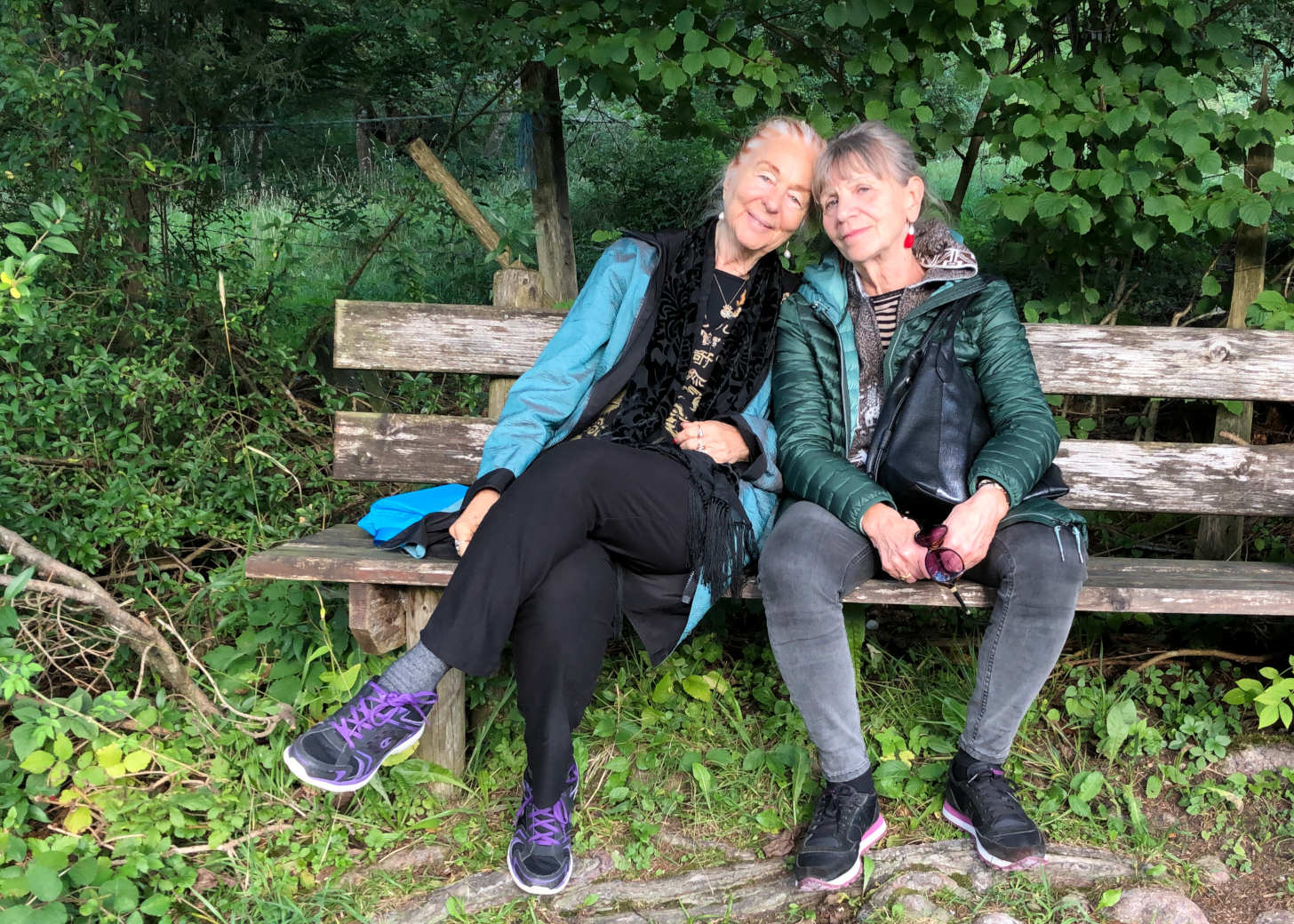
Photo credit: Maude Mayes
Photo note: Maude and Suzanne in Bavaria
Read what else we have written on this topic.
Get our free weekly newsletter about how to have a harmonious relationship.