Successful Relationships Reading Corner
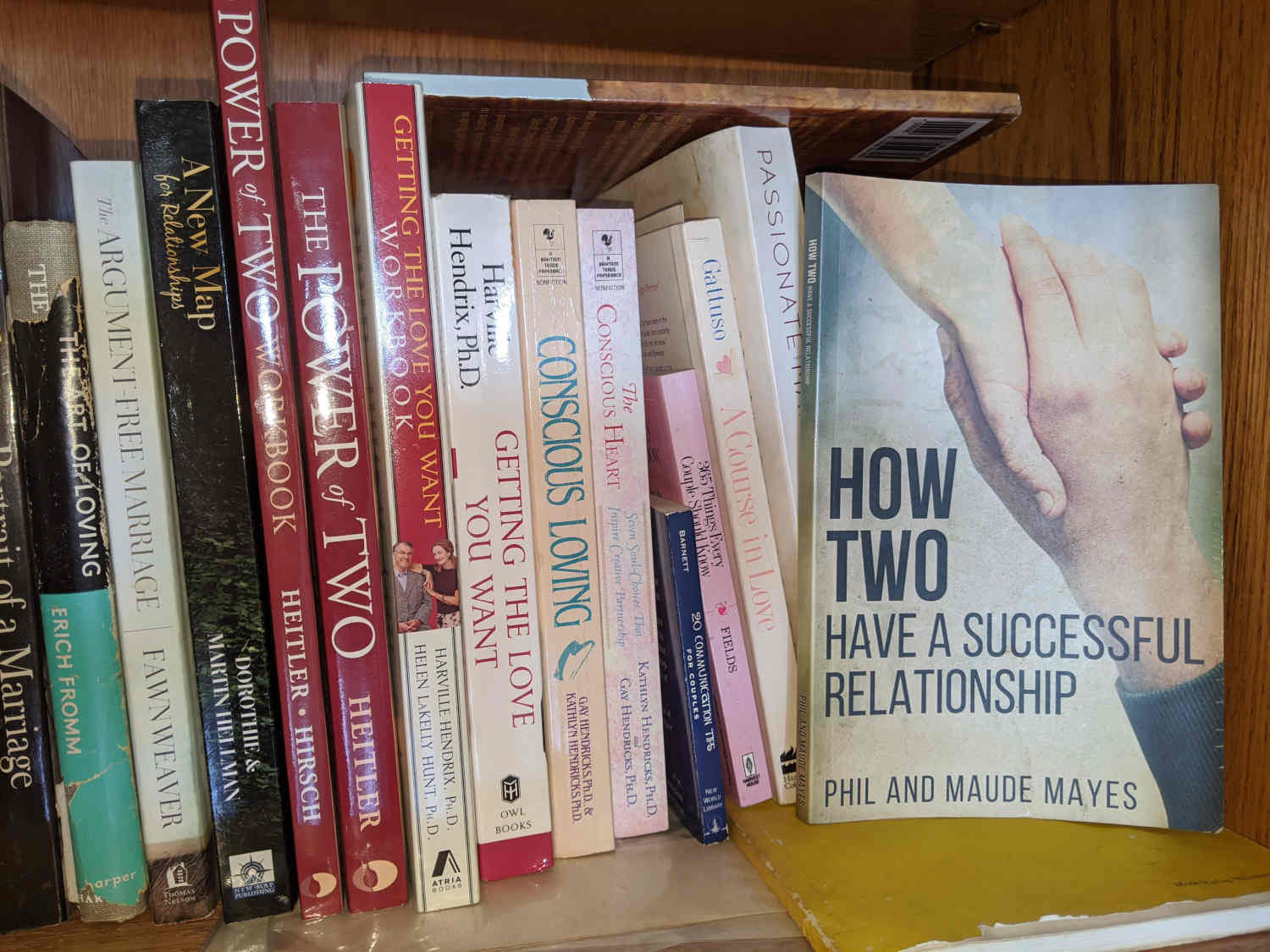
This week, we wrote that the secret to peaceful relationships is balance, not a balance sheet. Here are some other posts of ours that investigate this topic.
He’s Making a List and Checking it Twice “Measuring and comparing leads people to ignore the very differences that bring richness to the relationship in favor of some unified scale that seeks to put each partner on the same level in each activity. This brings a false picture of sameness and devalues the unique qualities each contributes. When you measure fairness in your relationship this way, you are certain to find inequalities. You feel that your contributions are not valued enough, that your partner is failing in execution or being unnecessarily meticulous, and when this is brought up, a whole list of grievances bursts forth, and the best you can hope for is a better awareness and a renegotiation of contributions. What’s underneath this need for fairness? A sense that you might get used, cheated, taken advantage of.”
Avoid Making Lists and Keeping Score in Your Relationships ” We don’t have an internal accountant maintaining a balance sheet tracking what we have each done in order to maintain fairness. We just don’t do it at all; it doesn’t even come up. Let’s take a look at why, and how this can be avoided. We are strongly aware that we are both on the same side and are assured that we are both acting for the good of our whole at all times. This comes from the deep matching of our most basic core values and the trust that this engenders. We know in a deep way that each of us does our very best and gives our fullest toward our common good. We both make different contributions and have different skills, and this creates a rich, full balance of action. We relate as equals, lovers and friends always wanting the best for each other. If there is ever a sense of dissonance, frustration or overload, then we communicate about it with each other. Grievances don’t accumulate because when differences come up between us, we talk about them, and this is easy precisely because we are on the same side.”
Why You Need to Avoid Keeping Score in Your Relationship “…we looked at the style of relating where making lists and keeping score is a common part of the relationship, or one partner’s interactions. Sometimes people do not feel assured that both they and their partner are truly on the same side. They remain in a state of assessing the other in terms of the balance of give and take, willingness to be there with full presence, and the balance of power. Exchanges and contributions to the shared life are seen more like deals than give and take. In these partnerships, total acceptance is not yet practiced. In a condition like this, one response is to be saving up ammunition for a possible attack; and by that, we mean when you are making lists of your own contributions, as well as your partner’s lack thereof. These are saved up, usually with tinges of resentment attached, for that day when, confronted by a list of your weaknesses or unequal contributions, you can fight back with a list of your own. This is often done unconsciously, but that list still resides somewhere near the surface to be called on at a moment’s suspicion of attack. Beware! Bringing forth lists tends to engender your partner’s lists! Our relationship has a different character and our exchanges seem devoid of measuring and comparing. So, we asked ourselves, “What are the characteristics of our relationship that prevent this type of relating?” We have a commitment to both being all in, which creates a sense of trust in the balance between each of our contributions. We accept each other as equal although sometimes vastly different. We are fully present, each pulling our weight, albeit in different areas and in different ways. This plays itself out on all levels, spiritual, mental, material. And we have seen this characteristic in many long-lasting and successful relationships. There is deep respect for the difference and uniqueness that leads to total acceptance of the other. Each partner brings a bouquet of attributes to merge into the whole.”