How to Stop Playing the Blame Game and Actually Feel Peaceful
Podcast: Download
Subscribe: Apple Podcasts | RSS
MAUDE: I experienced a close friend engaging in the blame game this last week, and it was such a strong experience that it made me want to write about it here. My friend seemed to be walking around drowning in a sea of frustration. He got upset or angry very easily. With this angry response came a raising of his voice, so that whatever he expressed came out much stronger than he probably meant it to.
He seemed unaware of the angry, loud response he kept giving, either toward a person or an event that was occurring. I gently told him several times that he was raising his voice, hoping it would help him realize how it was coming across to those around him. He responded each time saying, “That’s because he said, or she did, or this happened.” I finally added. “There is no real ‘because’ for raising your voice.”
And that’s the truth of peaceful relationships, so I’ll say it again: “There is no real ‘because’ for raising your voice.”
Blaming someone else, or something else, for your own behavior and reactions has many consequences, and none of them help you, or anyone else. Blame acts to separate people, not strengthen connections. It puts distance between you and the other person. They are now out there being responsible for something you are upset or angry about. This will usually engender a defensive response, and the situation can easily escalate, driving the people further and further apart. These episodes are not easy to recover from, leaving little rifts in the fabric of the relationship. The other person is no longer with you inside the connection, with both of you knowing you are on the same side.
When you blame someone, you give away your chance to do something about your own feelings. It limits your ability to learn from your experiences as you are making it about someone else’s behavior. You give away your power over your own reactions and choices, instead of learning how to pause and find out what is important to you in the situation. When you pause, it allows you to choose a response that communicates from a loving place how or what you are feeling.
When you own your feelings and speak about them, it removes any defensive response you might get from blame and accusations. Instead, you are sharing how you feel, and it can create further connection and intimacy. These kinds of episodes can be deep wells of information for your own growth if you venture inside, rather than pointing outside yourself to solve your turmoil.
PHIL: I think that in society in general, the concept of blame is important, because if nobody is to blame for anything, we’re in free fall. Blame is how we point a finger at someone who is doing something antisocial, whether that is embezzlement or littering, and whether we lock them up for embezzlement or shame them for littering, the intention is to control the behavior and make life better for everyone.
But in a personal relationship, blame works differently. It might elicit a response of “Oops, I forgot to get the milk; sorry,” but it’s more likely to generate a defensive response of “You should have put it on the list,” or a counter-attack of “And you forgot to pay the credit card.” Each person brings out their list of resentments, and they fight like gladiators until someone is too exhausted to continue.
The difference between a relationship and society in general is that in a relationship, you’re both on the same side. If you’re not, you need to be! In society, we ought to all be on the same side, but there are freeloaders and sociopaths and competing desires and different ideas about how to achieve them. I trust that you don’t have relationships with freeloaders or sociopaths, and relationships are built on mutual desires, not competing desires.
The defensiveness and blame that is necessary in society is completely unnecessary in a relationship where you are on the same side. Different people have different skills and talents, and this is a strength in a relationship; you have more capabilities between you than alone, so blaming someone for being less agile at balancing a checkbook or parking the car is pointless.
Just think what you are doing when you blame someone; you’re saying they’re incompetent. Even the alternative of describing how to do it better is an implicit put-down. You’re trying to control their actions, and that’s a burden for you. When you let go of all that and simply accept that’s who and how they are, it’s a relief for both of you. You live your life, and they live theirs. This might seem idealistic, because your lives are not separate; they’re intertwined. Suppose they’ve wrecked your car just going to the store? That’s just an event in life; blame doesn’t do anything useful at all. So cut it out. It’s of limited use in society, and of no use in your relationships.
Photo credit: Maude Mayes
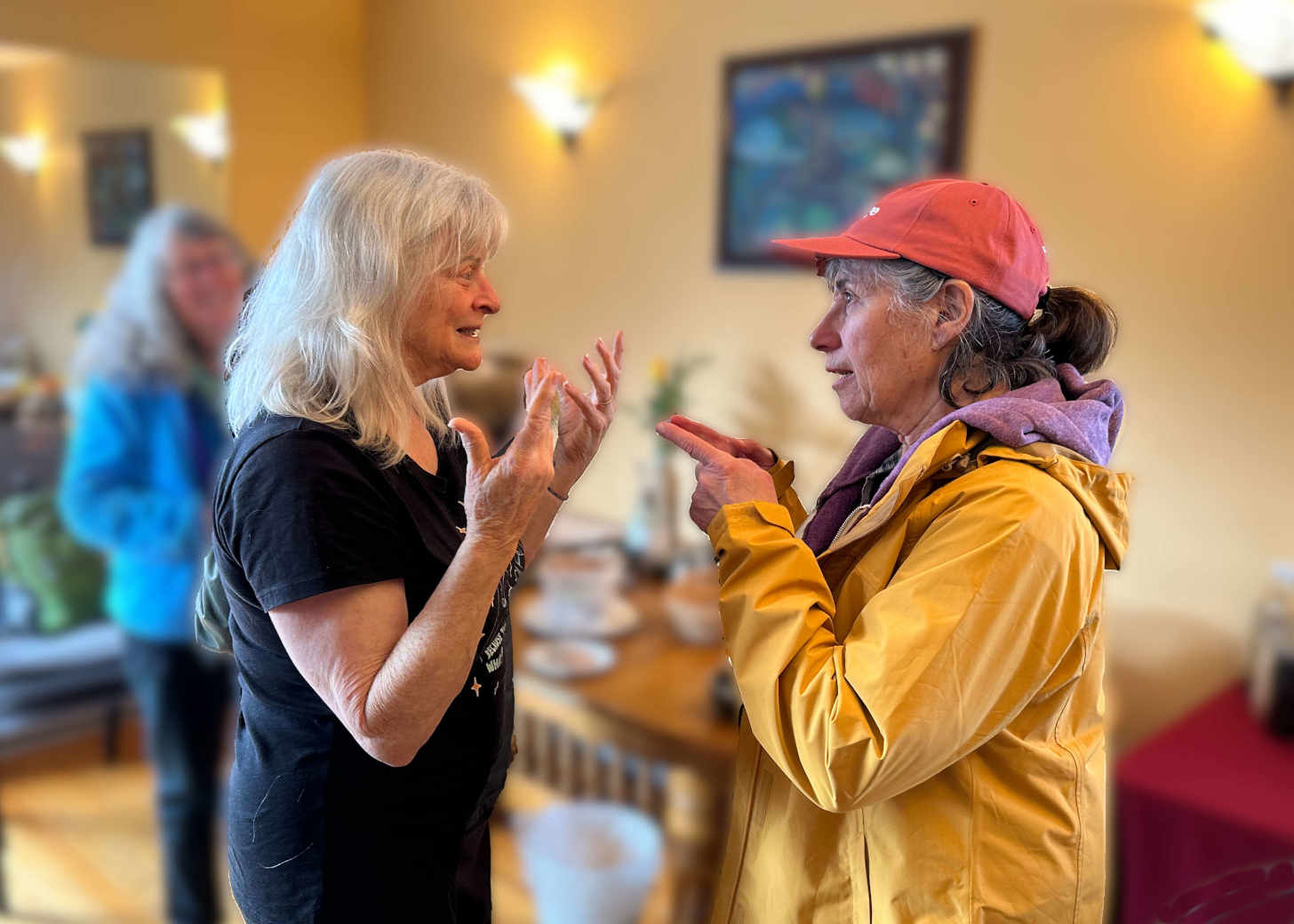
Photo note: Editor’s note: they weren’t really arguing!
Read what else we have written on this topic.
Get our free weekly newsletter about how to have a harmonious relationship.