How to Avoid Contention in Your Relationships
Podcast: Download
Subscribe: Apple Podcasts | RSS
MAUDE: We usually write about what it is like to have a peaceful relationship, sharing from our direct experience. It can also be helpful to look at what it is not. A peaceful relationship is not filled with tension. The people in the relationship do not go in and out of connection. They remain connected, regardless of what is happening within them or in the outer world.
A peaceful relationship does not cause you to feel unsure, unsafe, or on alert. When your relationships are peaceful, you do not feel the need to guard yourself, defend yourself, or to protect yourself or your feelings from the other person.
This way of relating is not contentious. Neither party feels the need to step out of the connection in order to assert their individuality. Each person is respected and not impinged upon. There is no issue of power or dominance, not ever. Both persons are strengthened by the exchanges and have no need to assert themselves over the other. There are degrees of this depending on just how conscious, intentional, and aware both parties in the relationship are.
This way of relating does not cause conflict. This is not to say there is no disagreement, or variance of viewpoint or opinion. However, these things are no longer a source of conflict. Difference of this kind is accepted comfortably, and often appreciated as an enrichment.
Peace does not come from trying to manipulate what is happening to what you think it should be. Peace comes from being with what is. In relationships, where values match, there is no attempt to change the other person into an image of who they could or should be.
Understanding how to create peaceful relationships is a whole process that takes a recalibration from instinctual behavior to choice behavior. It is a re-framing of where your attraction lies and requires inner work and the setting of conscious intention.
Phil and I have a peaceful relationship without true conflict or contentious interactions because we have made a choice to do so, and we have the intention to implement this choice. We have also done the work to change from reactive relating to responsive relating. What we are attracted to, our tastes, if you will, have altered enough to alert us to the difference between these two types of interactions. We both want to live in peace, and we know from experience how that feels. We are both attracted to that path whenever there is a choice.
PHIL: Every week, we are faced with the question of what to say, and we always end up choosing to describe how we are, rather than saying how you, dear reader, should act, because we want to come from our lived experience rather than any “ideas” about how people are together. That leads me to panic a little, because we are so consistently “us” that the subject must sound the same each week.
A major part of our nature is that we sit completely comfortably with each other, and we can do that because we know that whatever arises, it is not going to be contentious. That’s not because there’s a written contract; it comes from just knowing at a very deep level. The agreements that we do have, like wedding vows, for instance, reflect that knowing, rather than creating it.
So where does it come from? It is a sense, by now a knowledge, that Maude does not want a contentious relationship, and neither do I. It is our intention, our wish, our desire, our choice, and well within the first year, this became clear to us. It has been totally consistent across the following twenty-plus years, which seems very weird because it goes against all my previous experiences. I can offer several explanations.
One is that we share core values. I find these hard to name because they are feelings, not ideas. Fairness and caring come from Jonathan Haidt’s Five Moral Foundations. Throw goodwill and respect in as well. But what are the odds that the weight Maude and I give to these values is exactly the same? Even if human values are deeply embedded?
Another possibility is that humans are animals that live in groups, and as such, are primed to work together, not compete with each other. That trait suffuses all our interactions.
A third possibility is that of a shared identity. By being together and working together, we form something that is larger than and independent of either of us, just as a pair of scissors is formed from two blades. We both have a sense of us that coexists along with our individual sense of self, and the lack of disagreement arises from that sense.
Pick any one; pick all three. Make up your own explanation. For me, I think intention is the best word to explain it, because ultimately, we are in charge of how we act.
Photo credit: Phil Mayes
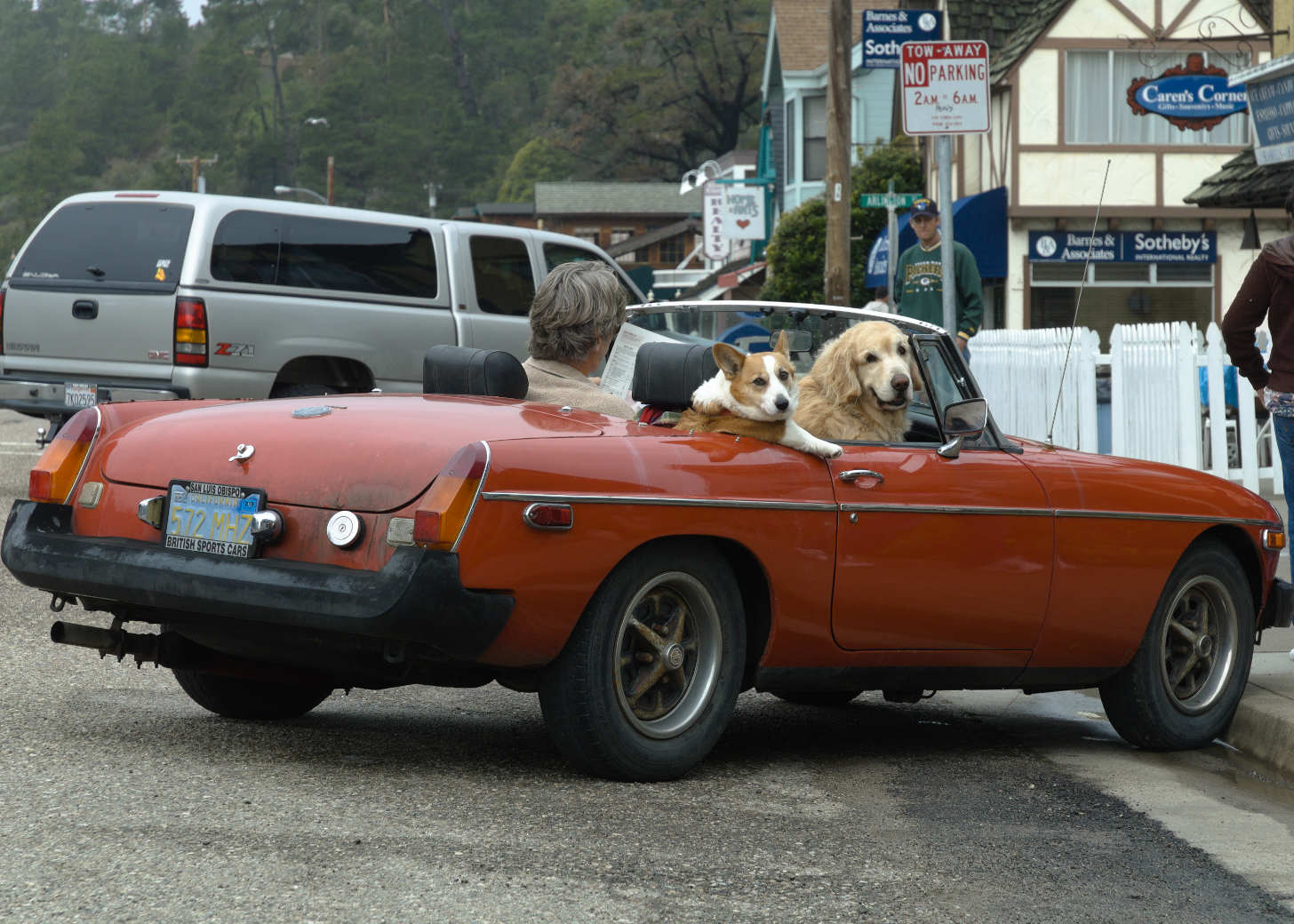
Photo note: A man and his dogs
Read what else we have written on this topic.
Get our free weekly newsletter about how to have a harmonious relationship.